
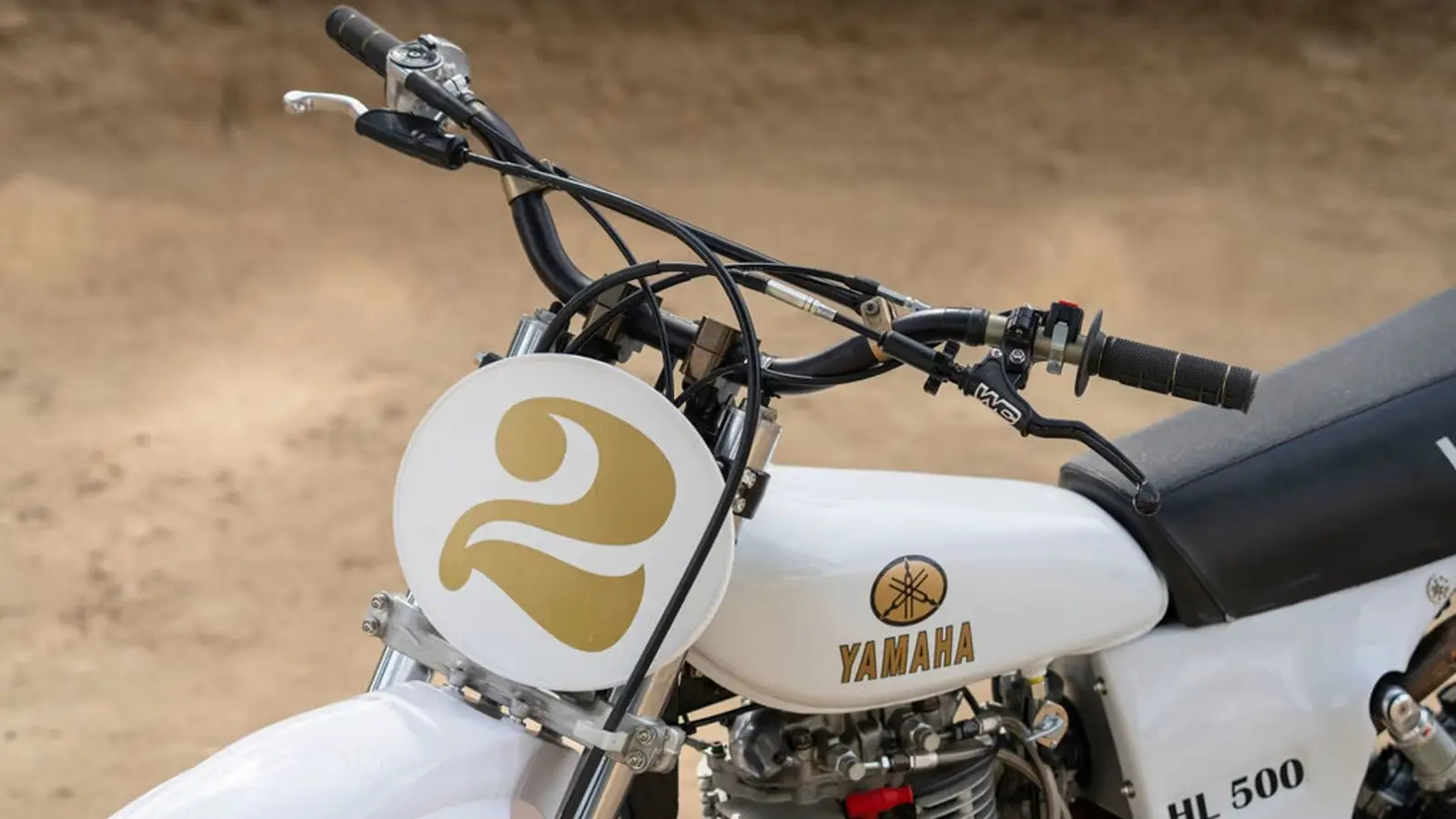
The Yamaha HL500 remains one of the most fascinating anomalies in motorcycle history, blending a Japanese engine, a Swedish racing concept, and British manufacturing. Born from the ambition of motocross champions Torsten Hallman and Sten Lundin, the project transformed a heavy trail machine into a competitive race winner.
Yamaha's original 499cc single was designed for endurance riding and trail use rather than Grand Prix motocross. Refusing to accept conventional limits, Hallman and Lundin stripped down the donor bike and developed a lightweight chromoly chassis to unleash the true potential of the four-stroke engine.
Related Stories

Get the Latest Automotive & Sports News from Vince's Auto Body Inc
Receive the latest updates on automotive industry, football, basketball, economy, and technology news directly in your inbox. It's free!
SubscribeThe breakthrough arrived in 1977 when legendary rider Bengt Åberg raced the machine in the 500cc Motocross World Championship, even securing an impressive moto win in Luxembourg. That surprising success sparked intense consumer demand that Yamaha's standard production lines were simply not prepared to handle.
To satisfy the market without retooling Japanese factories, Yamaha Europe commissioned the former Norton facility in Shenstone, England, to assemble approximately 400 complete motorcycles across 1978 and 1979. This unusual production lineage makes surviving models highly coveted among vintage collectors today.
American Kits And The Legacy Of The HL500
American riders faced a completely different path to acquiring the machine, as European models were largely unavailable through local dealerships. Torsten Hallman Racing partnered with ProFab in the United States to supply about 100 specialized frame kits for enthusiasts.
Building a ProFab kit required sourcing a donor TT500 engine along with custom suspension and bodywork components. While this meant a significant financial investment, it allowed American builders to customize their machines closer to Åberg's original race-winning formula.
The 1979 Mark II version introduced critical updates including a revised banana swingarm, better ignition, and a larger carburetor that pushed output to roughly 38 horsepower. These engineering refinements addressed the shortcomings of the initial 1978 production run and enhanced overall track capability.
Although two-strokes ultimately dominated professional racing for decades, the Yamaha HL500 left an enduring legacy. It proved that four-stroke performance still had a vital future, foreshadowing the revolutionary engine designs that would transform motocross years later.