
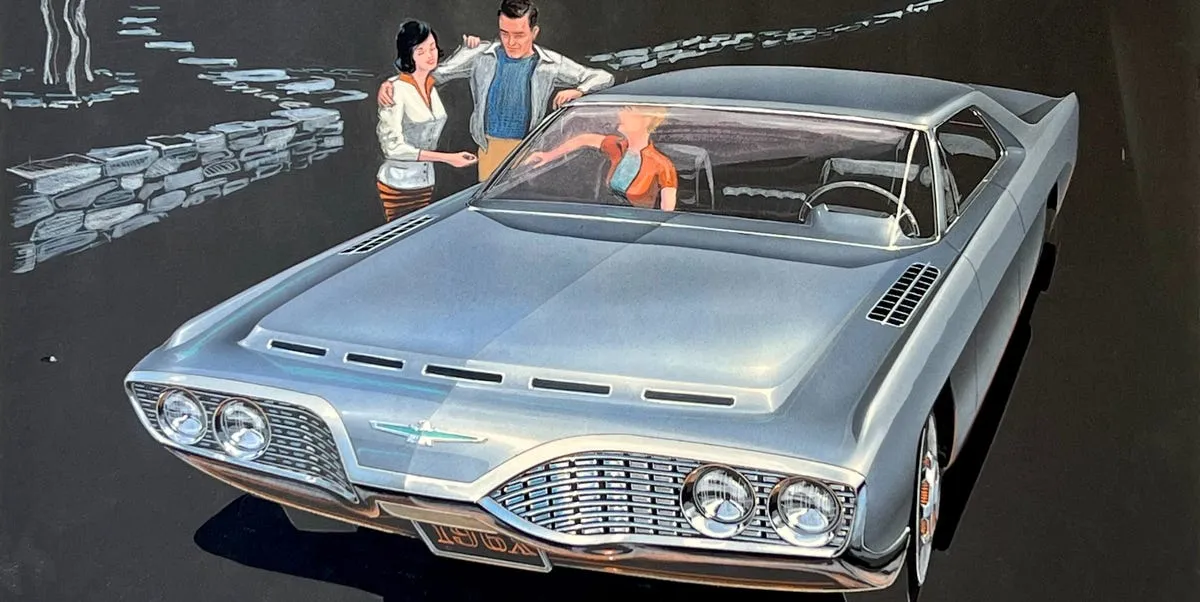
Car design as fine art has long lived at the intersection of creative expression and technical engineering, proving that automotive sketches are far more than mere blueprints. Since the very beginning of the profession, automotive designers have utilized powerful two-dimensional images to start the journey that ultimately leads to a production vehicle. These initial thought sketches serve as the visual equivalent of a mathematician working through complex equations, capturing the raw essence of an idea.
The methodology of crafting these compelling images has undergone significant transformation over the decades as new artforms and techniques emerged. Back in the 1930s, designers relied heavily on pastels, colored pencils, and gouache on colored paper to visually pull the forms of the car from the page. As time progressed into the 1960s, the adoption of translucent vellum and markers allowed for greater control in gradation, ultimately paving the way for the digital revolution brought by computer-aided design.
Related Stories

Get the Latest Automotive & Sports News from Vince's Auto Body Inc
Receive the latest updates on automotive industry, football, basketball, economy, and technology news directly in your inbox. It's free!
SubscribeEvery single designer invests deep personal pride and emotional components into their renderings to make them jump off the wall during critical reviews. A truly compelling sketch can successfully sell an innovative concept to stakeholders, helping to align the entire development team around a unified visual goal. While engineering specifications provide necessary boundaries, it takes a powerful single image to truly promise what the end product will look like.
The traditional art world has historically shown hesitation in respecting automotive designers as fine artists, despite eagerly exhibiting classic cars in institutions like New York's Museum of Modern Art. However, a cultural shift is currently underway, highlighted by the Detroit Institute of Arts establishing a specific curator for Automotive, Industrial, and Decorative Arts. This growing appreciation proves that the brilliant renderings created by visionary designers are finally earning their rightful place in cultural history.
Evolution of Car Renderings into Collector Pieces
Car design as fine art is further validated by a dedicated group of appreciative collectors who actively search out vintage automotive renderings for their private collections. Although these sketches were originally created simply as a functional means to an end, their intrinsic beauty has transcended industrial utility. Designers who once used these tools solely to define specific vehicle details are now seeing their preliminary artwork celebrated for its sheer aesthetic value.
Exhibitions like the upcoming Eyes on Design show in the Detroit area provide a rare public window into this hidden world of automotive creativity. Featuring original automotive renderings spanning from 1930 through 2000, such gallery displays speak more eloquently about the evolution of style than words ever could. Visitors have the unique opportunity to witness the exact strokes and techniques that shaped legendary vehicles of the past century.
The journey from a casual scribble in a school math book to becoming an Executive Director of Global Design illustrates the profound passion driving this artistic field. Industry veterans like David Rand note that standing back to contemplate classic automotive icons reveals the timeless emotional resonance embedded in every curve and contour. This deep connection between creator and machine forms the heartbeat of automotive history.
As modern technology continues to reshape how vehicles are conceptualized, the enduring legacy of hand-drawn and rendered automotive art remains entirely secure. The recognition of these sketches as legitimate artistic masterpieces ensures that the brilliant minds behind iconic car silhouettes will forever be remembered as true artists of the automotive world.