
BYD Files Solid State Battery Patents With 2027 Production Goal
BYD advances solid-state battery development by publishing six new patents centered on dual-electrolyte cathode cells, aiming for 2027 trial production.
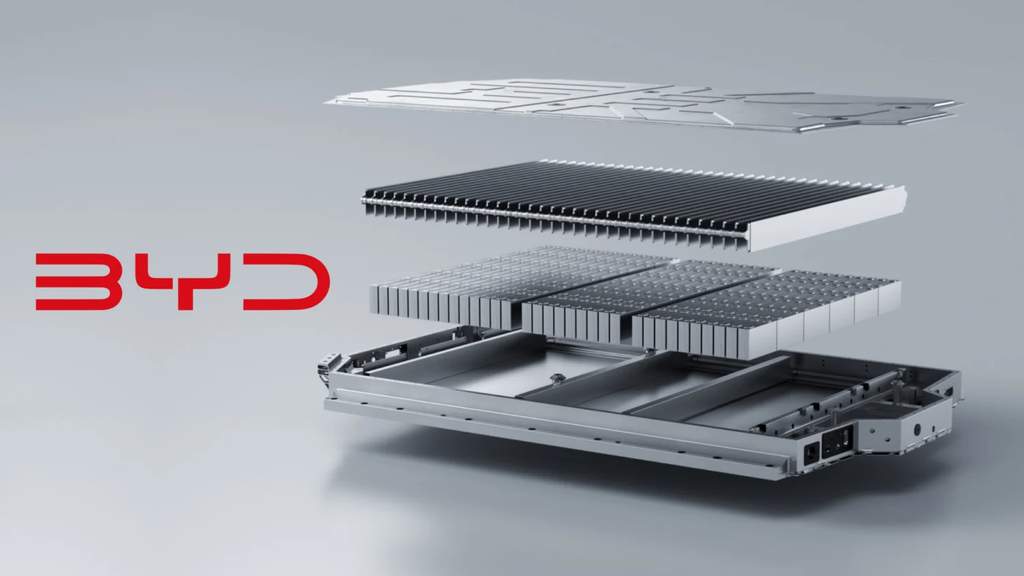
Close-up conceptual graphic of a solid-state battery cell with dual-electrolyte components inside an electric vehicle.
Addressing Solid Electrolyte Interface Challenges
The newly published Patents tackle the persistent engineering problem of maintaining reliable contact between solid materials during battery cycling. BYD incorporates a dual-electrolyte approach that combines halide and sulfide components to replace traditional liquid solutions.
Four of the filings specifically address material chemistry to prevent unwanted chemical reactions and thermal degradation. These designs introduce buffer layers and stable interlayers to boost overall cycle life.
Advanced Cathode Structures and Materials
Another patent outlines a dual-layer composite structure that pairs monocrystalline and polycrystalline cathode materials. This method mitigates individual material weaknesses while preserving high rate performance.
An additional tri-material approach treats metal oxides and sulfides with lithium before mixing them with solid electrolytes. This configuration successfully lowers electrical resistance at solid-solid interfaces.
Manufacturing Metrics and Production Goals
The remaining Patents introduce practical manufacturing solutions, including ionic liquid wetting agents and strict quality control metrics. One metric mandates that at least 60% of a cathode particle's perimeter must touch electrolyte particles.
Industry reports indicate that BYD plans to initiate small-scale production of these advanced cells in 2027. However, rival executives remain cautious, noting that mass-market adoption across consumer Electric Vehicles faces significant manufacturing constraints.
