
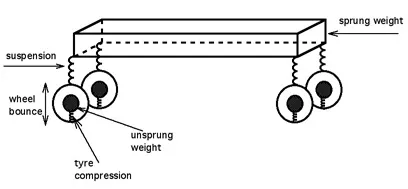
Unsprung mass of a vehicle refers strictly to the total weight of the suspension, wheels, tracks, and other components directly connected to them, contrasting sharply with the sprung mass supported by the system.
Engineers constantly face a delicate balancing act when dealing with unsprung weight, as lighter wheels provide superior road-tracking ability and enhanced grip during high-performance driving.
Related Stories

Get the Latest Automotive & Sports News from Vince's Auto Body Inc
Receive the latest updates on automotive industry, football, basketball, economy, and technology news directly in your inbox. It's free!
SubscribeHowever, reducing this weight often comes at a cost to passenger comfort, since lighter components absorb fewer vibrations, transferring more road noise directly into the cabin.
Advanced vehicle design strategies continually seek innovative ways to minimize this weight through lightweight materials and smart engineering choices without sacrificing structural integrity.
Engineering Trade-Offs and Suspension Dynamics
Vehicle stability under heavy acceleration or hard braking heavily relies on how well engineers manage unsprung components to prevent severe wheel hop and loss of traction.
Pneumatic tires and shock absorbers provide necessary dampening effects, yet their flexibility remains strictly limited by fuel economy standards and thermal considerations.
Automotive manufacturers frequently employ independent suspension systems or lightweight materials like aluminum and carbon fiber to optimize performance and reduce heavy loads.
Ultimately, mastering the balance of unsprung mass remains a defining factor in achieving the ideal combination of razor-sharp handling and refined passenger comfort.