
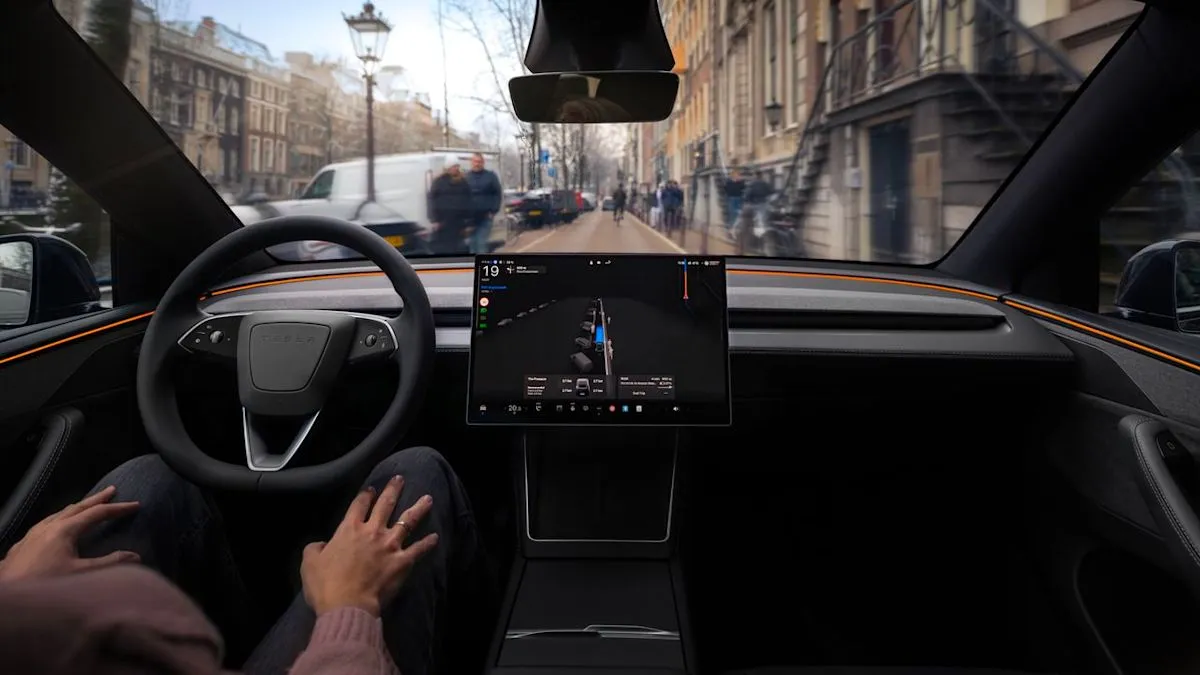
Tesla telemetry reports have revealed that Autopilot was active during two separate fatal crashes where vehicles came to sudden stops in active freeway lanes before being struck by trailing traffic. Newly scrutinized accident data matching redacted manufacturer reports highlights growing safety scrutiny surrounding Level 2 automated driving systems on major roadways.
The first incident occurred at 3 AM on October 31, 2025, in Mesa, Arizona, when a Tesla sedan halted on a busy freeway and was subsequently struck by a Ford F-350 pickup truck. A second similar tragedy unfolded around 9:25 PM on October 6, 2025, in Seminole County, Florida, where a 2020 Tesla Model 3 stopped in the center eastbound lane of I-4 before being clipped by a semi-truck.
Related Stories

Get the Latest Automotive & Sports News from Vince's Auto Body Inc
Receive the latest updates on automotive industry, football, basketball, economy, and technology news directly in your inbox. It's free!
SubscribeFederal safety mandates under a Standing General Order require automakers to disclose crashes where Level 2 driver-assist technology was engaged within 30 seconds of impact. In the Florida incident report reviewed by investigators, Tesla's automated driving system status was explicitly listed as verified engaged with a pre-crash speed of zero miles per hour.
Despite compliance with federal reporting requirements, critical data fields including the crash narrative, software version, and operational domain parameters were redacted as confidential business information. This lack of transparency has left safety regulators and independent analysts unable to definitively determine whether Autopilot or Full Self-Driving software was operating at the time of the collisions.
Safety Concerns And Regulatory Scrutiny Intensify Over Autopilot

Industry observers have pointed to previously documented issues with phantom-braking, a phenomenon where driver-assist features react aggressively to nonexistent obstacles on the road. However, investigators note that alternate explanations such as driver medical emergencies or fatigue cannot be completely ruled out without complete data logs.
The National Highway Traffic Safety Administration is currently investigating Tesla regarding its compliance and transparency in reporting crashes involving advanced driver-assistance systems. Critics argue that aggressive marketing of automation features has fostered a dangerous sense of overconfidence among motorists.
Safety advocates continue to stress that Level 2 driver-assistance technologies require constant human supervision and are far from achieving true autonomous capability. Without full transparency from manufacturers, understanding the root cause of these fatal incidents remains an uphill battle for traffic safety authorities.
As regulatory pressure mounts, the automotive industry faces an urgent demand for standardized reporting and open telemetry access during fatal investigations. Ensuring public safety on modern highways will depend heavily on bridging the gap between automated driver assistance claims and real-world performance realities.